News from ETSON and its members*
11 Sep 2025 | JSI | 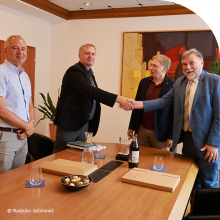
|
Change of leadership at Jožef Stefan Institute Prof. dr. Leon Cizelj is the new Acting Director of the Jožef Stefan Institute. |
11 Sep 2025 | GRS | 
|
Hidden risks: Computer security also encompasses the supply chain Be it software updates, cloud services or external analysis platforms - modern IT systems rely on a large number of digital service providers. What brings efficiency also harbours new risks: This is because attackers can penetrate deep into well-protected systems unnoticed via an inadequately protected supply chain - even in safety-critical areas such as nuclear engineering. A new GRS research project looks at how such attacks unfold, which systems are particularly at risk, and how operators can protect themselves better. |
11 Sep 2025 | RSD | 
|
UK aims to improve regulation of nuclear projects The UK Government has established a Nuclear Regulatory Task Force to examine the regulatory approach to civil and defence projects. |
11 Sep 2025 | PSI | 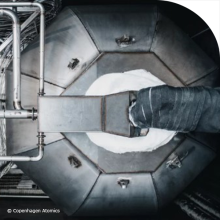
|
Cooperation in reactor research Copenhagen Atomics, a Danish molten salt reactor developer, and the Paul Scherrer Institute PSI, Switzerland’s largest research institute for natural and engineering sciences, have signed a large-scale experimental collaboration agreement. |
11 Sep 2025 | GRS | 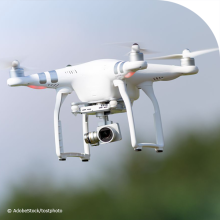
|
The role of drones in nuclear safety and security - an overview of the benefits and risks of using this technology In recent years, drones - also known as unmanned aerial vehicles, systems or devices (UAV, UAS or UAD for short) - have become increasingly important. |
11 Sep 2025 | RSD | 
|
Head of RSD becomes ETSON’s Second Vice President Frederic Wheeler, Head of the Regulatory Support Directorate (RSD) at Amentum, has been appointed as the Second Vice President of ETSON for the next three years. |
| 11 Sep 2025 | PSI | Generation IV International Forum (GIF) in Switzerland | hosted by PSI/NES in April 2025 The 53rd GIF Experts Group and 59th GIF Policy Group Meetings (EG/PG) took place from April 7-10, 2025. |
| 11 Sep 2025 | GRS | Effects of subrosion on a potential repository in salt rock Subrosion, i.e. the leaching of easily soluble rocks in the subsoil, can impair the barriers of a repository for high-level radioactive waste. In a recently completed research project, scientists at GRS investigated these processes and compiled affected areas and boundary conditions in a web application. Model calculations of groundwater flow help to better assess the long-term effects of subrosion on the containment of radionuclides in a repository system. |
11 Sep 2025 | PSI | 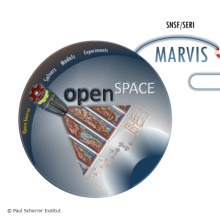
|
Not Rocket Science, just Nuclear Rocket Science The PSI Laboratory for Reactor Physics and Thermal-Hydraulics (LRT) conducts computational and experimental research with focus on the safety of nuclear reactors and systems. In recent years, it established the EPSILON program to coordinate and consolidate its research activities on nuclear space applications. Among other things, developments were initiated towards an open-source European platform for high-fidelity simulations and experiments dedicated to space nuclear reactors. Referred to as the openSPACE platform, its underlying concepts are a) to include not only solvers but also reference simulation models as well as experimental validation data; b) to make all of these available to the broader and combined nuclear- and space communities for usage and/or further developments. Through this, the goal is thus not only to facilitate collaborative research in this area but also to enable effective support to the European Space Agency for thorough design, safety and performance evaluations of nuclear reactor systems for in-space propulsion and/or surface power. A first development phase focused on nuclear electric propulsion was proposed and retained among the two projects selected in 2023 by the Swiss National Science Foundation (SNSF) for its MARVIS call (Multidisciplinary Advanced Research Ventures in Space) and funded by the Swiss Secretariat for Research and Innovation (SERI). This project, to be conducted via four inter-connected PhD theses, was launched in October 2024 and this marks thus a key milestone for the propulsion of PSI nuclear research towards space. |
11 Sep 2025 | PSI | 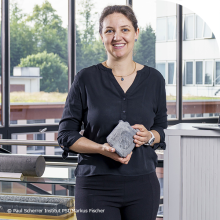
|
Artificial intelligence explores the underground Researchers at the Paul Scherrer Institute PSI have shown that artificial neural networks have the potential to determine very precisely the characteristics of rock layers, like their mineralogical composition, solely on the basis of drill core images. This could speed up future geological investigation efforts while simultaneously optimising costs. |
21 Jul 2025 | ETSON | 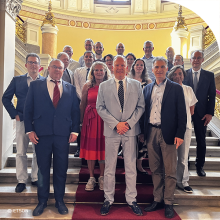
|
News from the ETSON General Assembly Meeting - June 2025 The ETSON General Assembly convened on June 25-26, 2025, at the Academy of Sciences in Budapest, Hungary. Representatives from member organizations gathered to discuss key topics and make significant decisions for ETSON's future. |
13 Jun 2025 | ASNR | 
|
Annual Meeting of the ANCHORS Project (EURAD-2): ASNR hosts its European Partners in Montpellier and Tournemire ANCHORS contributes to the safety assessment after the closure of geological disposal sites. It is part of the European partnership EURAD-2 (2024-2029), which brings together stakeholders in the research on radioactive waste management. |
13 Jun 2025 | SSTC NRS | 
|
Crisis communication in times of war: experience, challenges and responses Crisis communication has become an integral part of the Ukrainian media space long before the full-scale invasion. Its importance was acutely felt in the spring of 2020, during the global COVID-19 pandemic. At that time, the media faced the need to convey information from official sources to the public in a prompt, objective, and responsible manner. The key task was to maintain public trust, prevent panic and ensure compliance with life-saving recommendations. |
13 Jun 2025 | LEI | 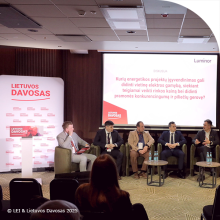
|
The benefits of small nuclear reactors were presented at the Lithuanian's main economic forum, "Lithuanian Davos 2025" On March 19, 2025, the largest and most significant economic forum in the country, "Lithuanian Davos 2025," took place, traditionally gathering leaders from business, politics, and society. During the forum, there were not only standard sessions focusing on economic development, investment potential, accessibility of financing, and real estate market development, but also special sessions dedicated to the development of Lithuania's energy sector, defense industry. This 18th event featured a presentation "The Benefits of Small Nuclear Reactors: Where is the Value for the State?" by Dr. Tadas Kaliatka, the chief research associate at the Nuclear Equipment Safety Laboratory of the Lithuanian Energy Institute. |
13 Jun 2025 | SSTC NRS | 
|
Attempt on nuclear safety: Chornobyl is again in the focus of world attention In April, the world traditionally remembers one of the worst man-made disasters in human history - the Chornobyl accident in 1986. This tragedy not only left a deep mark in the hearts of millions of people, but also changed approaches to nuclear safety around the world. But almost 40 years later, Chornobyl is once again in the spotlight - this time because of a threat that arose not from a technical failure but from armed aggression. |
Stay informed - subscribe to our newsletter.
Copyright · All rights reserved