News from ETSON and its members*
11 Sep 2025 | PSI | 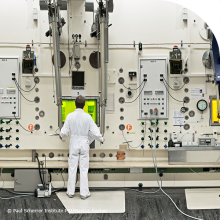
|
60 years of the Hotlab The Hotlab at the Paul Scherrer Institute PSI is a unique experimental facility for analysing highly radioactive materials – its 60th anniversary marks a milestone not only in the institute’s history but also in the history of Swiss nuclear technology as a whole. |
11 Sep 2025 | PSI | 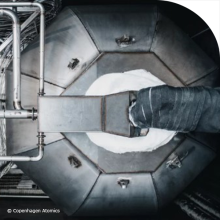
|
Cooperation in reactor research Copenhagen Atomics, a Danish molten salt reactor developer, and the Paul Scherrer Institute PSI, Switzerland’s largest research institute for natural and engineering sciences, have signed a large-scale experimental collaboration agreement. |
| 11 Sep 2025 | PSI | Generation IV International Forum (GIF) in Switzerland | hosted by PSI/NES in April 2025 The 53rd GIF Experts Group and 59th GIF Policy Group Meetings (EG/PG) took place from April 7-10, 2025. |
11 Sep 2025 | PSI | 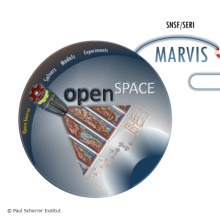
|
Not Rocket Science, just Nuclear Rocket Science The PSI Laboratory for Reactor Physics and Thermal-Hydraulics (LRT) conducts computational and experimental research with focus on the safety of nuclear reactors and systems. In recent years, it established the EPSILON program to coordinate and consolidate its research activities on nuclear space applications. Among other things, developments were initiated towards an open-source European platform for high-fidelity simulations and experiments dedicated to space nuclear reactors. Referred to as the openSPACE platform, its underlying concepts are a) to include not only solvers but also reference simulation models as well as experimental validation data; b) to make all of these available to the broader and combined nuclear- and space communities for usage and/or further developments. Through this, the goal is thus not only to facilitate collaborative research in this area but also to enable effective support to the European Space Agency for thorough design, safety and performance evaluations of nuclear reactor systems for in-space propulsion and/or surface power. A first development phase focused on nuclear electric propulsion was proposed and retained among the two projects selected in 2023 by the Swiss National Science Foundation (SNSF) for its MARVIS call (Multidisciplinary Advanced Research Ventures in Space) and funded by the Swiss Secretariat for Research and Innovation (SERI). This project, to be conducted via four inter-connected PhD theses, was launched in October 2024 and this marks thus a key milestone for the propulsion of PSI nuclear research towards space. |
11 Sep 2025 | PSI | 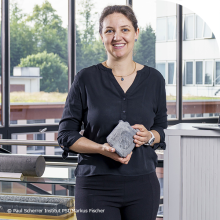
|
Artificial intelligence explores the underground Researchers at the Paul Scherrer Institute PSI have shown that artificial neural networks have the potential to determine very precisely the characteristics of rock layers, like their mineralogical composition, solely on the basis of drill core images. This could speed up future geological investigation efforts while simultaneously optimising costs. |
22 Dec 2023 | PSI | 
|
Forensics: Quantitative tracing of Silicon in CRUD Chalk River Unidentified Deposits (CRUD) are dissolved and suspended solids, product of the corrosion of structural elements in water circuits of nuclear reactors. The chemical composition of CRUD is variable as it depends on the composition of the reactor’s structural material, as well as the types of refueling cycles. Recent internal investigations have found unexpected but significant Si-amount in CRUD. The chemical composition of CRUD holds key information for an improved understanding of CRUD formation and possible impact in fuel reliability and contamination prevention. The standard analytical methods available in the hot laboratory did not allow an easy quantitative determination of the Si-amount in CRUD. A new innovative procedure has been developed and tested with synthetic CRUD name Syntcrud. The adapted flex-fusion digestion method presented here is able to provide reliable concentrations of several elements within CRUD, including Si, which was not possible in methods used previously for ICPMS measurement. |
24 Oct 2023 | PSI | 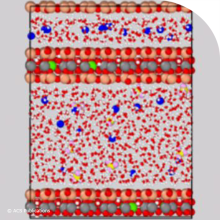
|
Mobility of Dissolved Gases in Smectite under Saturated Conditions Various gases are produced by metal corrosion and organic material degradation in deep gelological repository for nuclear waste. To ensure repository safety, it's important to demonstrate that gases can be dissipated by diffusion in host rocks and prevent pressure buildup in repository near field. Smectite mineral particles form a pore network that is usually saturated with water, making gas diffusion the primary transport mechanism. |
15 May 2023 | PSI | 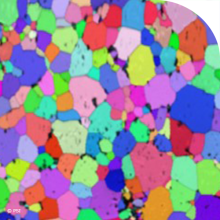
|
A unique environment for research on highly radioactive materials PSI has a unique (worldwide) environment for the investigation of highly radioactive / toxic materials:
|
15 May 2023 | PSI | 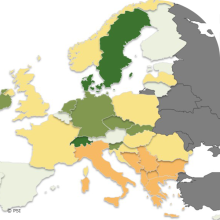
|
Evaluation of European electricity supply resilience The increasing risk of extended electricity supply disruptions and severe electricity price fluctuations strongly motivate an evaluation of electricity supply resilience. In this direction, this research proposes a multicriteria decision support framework to assess resilience at a country level, based on three major dimensions: Resist, Restabilize and Recover. In total, 35 European countries are ranked according to their performance on 17 indicators, through a synergy of MCDA methods, techniques and communication protocols. The assessment framework has been extended to incorporate the Choquet Integral method, in order to accommodate potentially interacting pairs of criteria and negate their arbitrary effects on the final evaluation results. The analysis incorporates country data from credible international databases, as well as the preference information of a European energy expert. The results are envisaged to support energy policymakers in Europe and provide guidelines and areas for improvement at a country level. |
15 May 2023 | PSI | 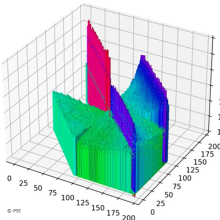
|
Approximate Computing for Nuclear Reactor Simulations During the last decades, computing power has been subject to tremendous progress due to the shrinking of transistor size as predicted by Moore’s law. However, as we approach the physical limits of this scaling, alternative techniques have to be deployed to increase computing performance. In this regard, the next big advance is envisioned to be the usage of approximate computing hardware based on field-programmable gate arrays and/or digital-analogue in-memory circuits. Such approximate computing can provide disproportional gain (x1000) in energy efficiency and/or execution time for acceptable loss of simulation accuracy. |
28 Dec 2022 | PSI | 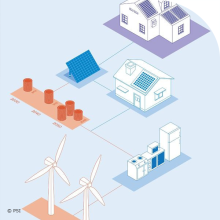
|
“More objectivity would be helpful” The current energy debate could do with more facts and less gut feeling – argue Thomas J. Schmidt, renewables expert, and Andreas Pautz, nuclear energy specialist. The current energy debate could do with more facts and less gut feeling – argue Thomas J. Schmidt, renewables expert and head of the PSI Energy and Environment Research Division, and Andreas Pautz, nuclear energy specialist and head of the PSI Nuclear Energy and Safety Research Division. In this joint interview, they set out the challenges that science needs to address in connection with the Swiss government’s Energy Strategy 2050 and why nuclear energy and renewables experts must work closely together. |
28 Dec 2022 | PSI | 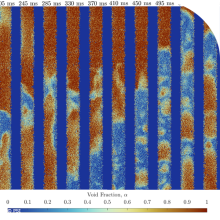
|
Award winning work on high-resolution X-ray radiography methods for boiling experiments at high pressure Light Water Reactors (LWRs) such as the ones operating in Switzerland work at relatively high temperatures and pressures. As a consequence, thermal-hydraulics experiments investigating relevant LWRs phenomena at prototypical conditions require test sections with relatively thick steel walls. This poses significant challenges for the implementation of suitable instrumentation to capture phenomena of interest, such as the flow regimes during transition from liquid to steam. The characterization of flow regimes in the presence of boiling is rather complex, and their better understanding would allow to develop mathematical modeling tools that can be used to optimize equipment and better assess safety margins. To perform in-situ measurements of the boiling process under high-pressure conditions, the team of authors from PSI, ETH, and the University of Michigan has developed a new high-fidelity and high-speed imaging system based on x-ray radiography, which provides high-resolution details on the boiling process while being non-intrusive. Since the instrumentation is located outside of the test section, it has also the advantage that can be easily moved to take measurements in different region of the test sections. |
28 Dec 2022 | PSI | 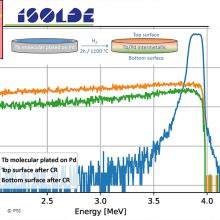
|
Synthesis of Metallic Lanthanide Thin Samples This work aimed to produce intermetallic samples of platinoid metals (active metal matrix) and lanthanides (co-metal) and via the method of Coupled Reduction, i.e. a thermal treatment of the combination of the lanthanide oxide and noble metal at high temperature, as high as 1100 °C, under a constant flow of H2. We have demonstrated by means of several techniques, such as Scanning Electron Microscope, Energy Dispersive X-Ray Spectroscopy, Alpha Spectrometry and Radiographic Imaging, that this method, at defined experimental conditions (temperature, pressure and concentration) yields a metallic lanthanide thin film when using platinum as active metal matrix. Conversely, the formation of a bulk intermetallic compound was obtained when using Pd as matrix. Those systems will have applications in different nuclear physic and radiochemistry studies, such as irradiation targets for production of superheavy elements and for nuclear data determination. |
28 Dec 2022 | PSI | 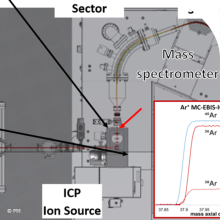
|
MC-EBIS-ICP-MS – a unique dual Ion Source Mass Spectrometer This highlight presents a successful, in-house developed integration of an Electron Beam Ion Source (EBIS) able to ionize gases to high charge states with a customized commercial MC-ICP-MS. The successful joining of the two ion flight paths is a milestone towards comprehensive routine analyses of solids, liquids, and gases using THE SAME MASS SPECTROMETER, the latter analyses free from atmospheric contamination. After implementation of an introduction system for gas mass spectrometry, routine analyses will comprise isotope ratio and relative abundance determinations of fission gases in used nuclear fuel. In addition to the unique versatility of the MC-EBIS-ICP-MS, inclusion of the EBIS further opens the little-studied field of mass spectrometry of highly charged ions. |
28 Dec 2022 | PSI | 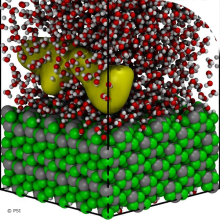
|
Deciphering the molecular mechanism of water boiling at heterogeneous interfaces Water boiling control evolution of natural geothermal systems is widely exploited in industrial processes due to the unique non-linear thermophysical behavior. Even though the properties of water both in the liquid and gas state have been extensively studied experimentally and by numerical simulations, there is still a fundamental knowledge gap in understanding the mechanism of the heterogeneous nucleate boiling controlling evaporation and condensation. In this study, the molecular mechanism of bubble nucleation at the hydrophilic and hydrophobic solid–water interface was determined by performing unbiased molecular dynamics simulations using the transition path sampling scheme. Analyzing the liquid to vapor transition path, the initiation of small void cavities (vapor bubbles nuclei) and their subsequent merging mechanism, leading to successively growing vacuum domains (vapor phase), has been elucidated. The simulations reveal the impact of the surface functionality on the adsorbed thin water molecules film structuring and the location of high probability nucleation sites. |
Stay informed - subscribe to our newsletter.
Copyright · All rights reserved